
A good website structure groups pages into clear topics, keeps key pages within three clicks and links related pages together.
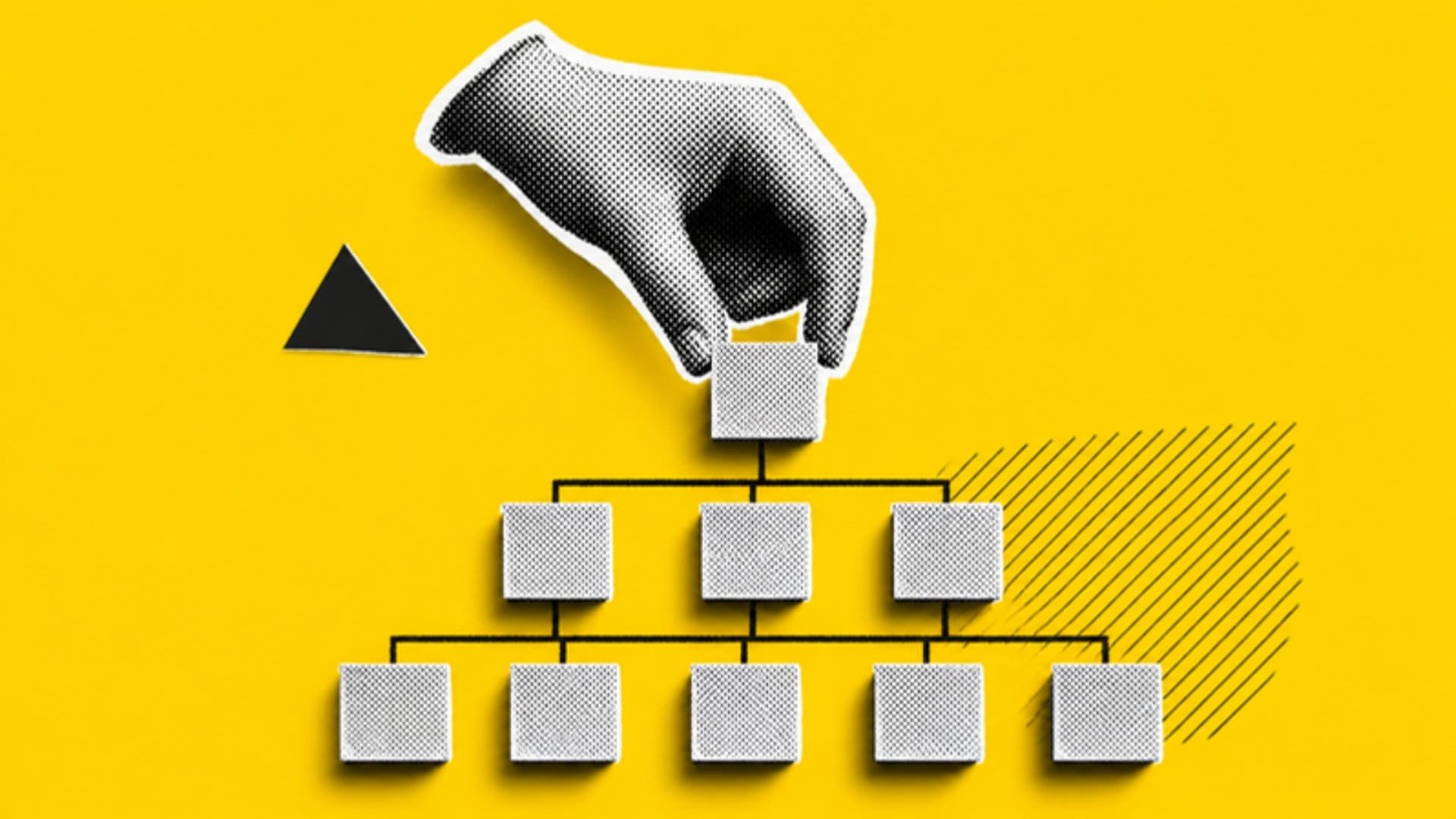
A good website structure groups your pages into a small number of clear topics, keeps every important page within three clicks of the homepage, and links related pages to each other. That makes it easy for people to find what they need, and easy for search engines to crawl your site and work out what each section is about.
Structure is one of the few SEO decisions that affects every page at once. Get it right and new pages slot into place, pick up authority from the pages around them and get found quickly. Get it wrong and you end up with orphaned pages, pages competing for the same search, and a menu nobody can use.
It’s also far cheaper to fix at the planning stage than after launch, when every change means redirects and a wobble while Google catches up. If you’re planning a new site or a redesign, settle the structure before anyone designs a page.
What an SEO-friendly website structure looks like
An SEO-friendly structure is a shallow hierarchy. The homepage sits at the top, a handful of main service or category pages sit below it, and supporting pages sit below those. Each level links down to its children and back up to its parent, and pages on the same topic link across to each other.
For a typical service business, that looks something like this:
- Homepage
- Service pages, one for each service you sell
- Sector or location pages, sitting under the service they relate to
- Guides and blog posts, grouped into topics that support those services
- Case studies, linked from the services and sectors they prove
The test is simple: from any page, a visitor or a crawler should be able to tell where they are and where to go next. Google uses links to find new pages and to understand how pages relate, so as far as search engines are concerned, the way you link pages together is your structure.
How to build it step by step
- List every page you have or need. Export your current URLs from a crawl or your XML sitemap, then add the pages you plan to create. You can’t organise what you haven’t counted.
- Group pages by topic and search intent. Use keyword research to see how people actually search for what you offer. Pages that meet the same need belong in the same group, and two pages chasing the same query should usually become one.
- Choose one parent page for each group. This is the service, category or pillar page that covers the topic broadly and links out to the detailed pages beneath it.
- Keep it shallow. Aim for important pages to be no more than three clicks from the homepage. Deep pages tend to be crawled less often and receive less internal link value.
- Reflect the hierarchy in your URLs where it helps. A folder such as /services/technical-seo/ tells people where they are. Don’t nest folders so deeply that URLs become long, and don’t change live URLs for tidiness without a redirect plan.
- Build the main navigation from the parent pages. Your menu should link to the top-level groups, not to every page on the site.
- Add contextual internal links. Link from body copy to related pages using descriptive anchor text. This is where most sites fall short.
- Add breadcrumbs. Breadcrumbs show the path back up the hierarchy and give Google another clear signal of how pages fit together.
Flat versus deep site structures
A flat structure keeps most pages close to the homepage, while a deep one buries them under many layers. Flat is usually better for SEO, but a site with hundreds of pages all hanging off one menu is just as hard to use.
| Flat structure | Deep structure | |
|---|---|---|
| Clicks to key pages | Two or three | Five or more |
| Crawling | Pages found and recrawled quickly | Deep pages crawled less often |
| Internal link value | Spread across more pages | Thins out with each level |
| Main risk | Crowded menus if there’s no grouping | Pages end up orphaned or forgotten |
The sweet spot is a shallow hierarchy with clear groups. Large ecommerce sites will always have more levels, so they lean harder on breadcrumbs, sensible filters and links from popular pages to keep products within reach. B2B buyers research for weeks before they get in touch, which is why we put this at the heart of our B2B SEO work.
Use topic clusters to show depth
Topic clusters are the content side of site structure. A broad pillar page links to a set of detailed articles that each cover one part of the subject, and every article links back to the pillar and across to its siblings.
This does two jobs. It shows Google that you cover a subject properly rather than with one thin page, and it stops your blog turning into a date-ordered pile of posts that only connect through the archive. Our guides to pillar pages and content hubs cover how to plan them.
Common structure problems and how to fix them
Most structure problems come down to pages that are hard to reach or pages that overlap. These are the ones we see most often:
- Orphan pages. Pages with no internal links pointing at them. Search engines struggle to find them and they rarely rank. Run a site crawl, compare it with your sitemap to find them, then link each one from its parent page.
- Keyword cannibalisation. Two or more pages targeting the same query, so neither ranks well. Merge them and 301 redirect the weaker page.
- Navigation that hides key pages. Important pages that only appear in the footer, or menus built so links don’t render as plain HTML. Make sure menu links are standard links Google can follow.
- Endless tag and filter pages. Tag archives and filter combinations can create thousands of thin URLs. Keep the useful ones and stop the rest being crawled or indexed.
- A blog with no grouping. Hundreds of posts that only link to the newest ones. Use categories that mean something and link related posts together.
A structural review is a standard part of our SEO audits and wider technical SEO work, because on an established site it’s often where the biggest gains are hiding.
Website structure and AI search
The same structure helps with AI search. Google’s AI Overviews and tools like ChatGPT search draw on pages they can crawl and understand, and a clear hierarchy with descriptive headings and internal links makes it easier to see what you’re an authority on. There’s no separate structure for AI. A site that’s clear for people and for search engine crawlers is clear for these tools too.
If you’re planning a new site or think your current structure is holding you back, book a free strategy session and we’ll work through it with you.
Related reading: our guides to technical SEO, on-page SEO and trailing slashes.
Common questions
How many clicks from the homepage should a page be?
Important pages should be no more than three clicks from the homepage. It isn’t a hard rule from Google, but pages buried deeper tend to be crawled less often and receive less internal link value.
Do URLs need to match the site structure?
It helps but it isn’t essential. Folders that reflect the hierarchy make URLs easier to read, but internal links and breadcrumbs matter more than the URL itself.
Should I change my URLs to improve my structure?
Only if the gain is worth it. Every changed URL needs a 301 redirect, and rankings can wobble while Google processes the change. Fixing internal links and navigation first often gets most of the benefit.
What is the difference between site structure and navigation?
Site structure is how all your pages are organised and linked. Navigation is the menu that shows the top of that structure to visitors. Good navigation comes from good structure, not the other way round.